Wednesday, 13 November 2013

Rye and Folkestone

I meant to blog these in September the weekend that I went here but as always things got in the way.

A lovely little sweet shop in Rye! I went for some sour cherry sweets and was warned that they are very sour; being solid and all I shrugged it off. Oh my word, they are SOUR.


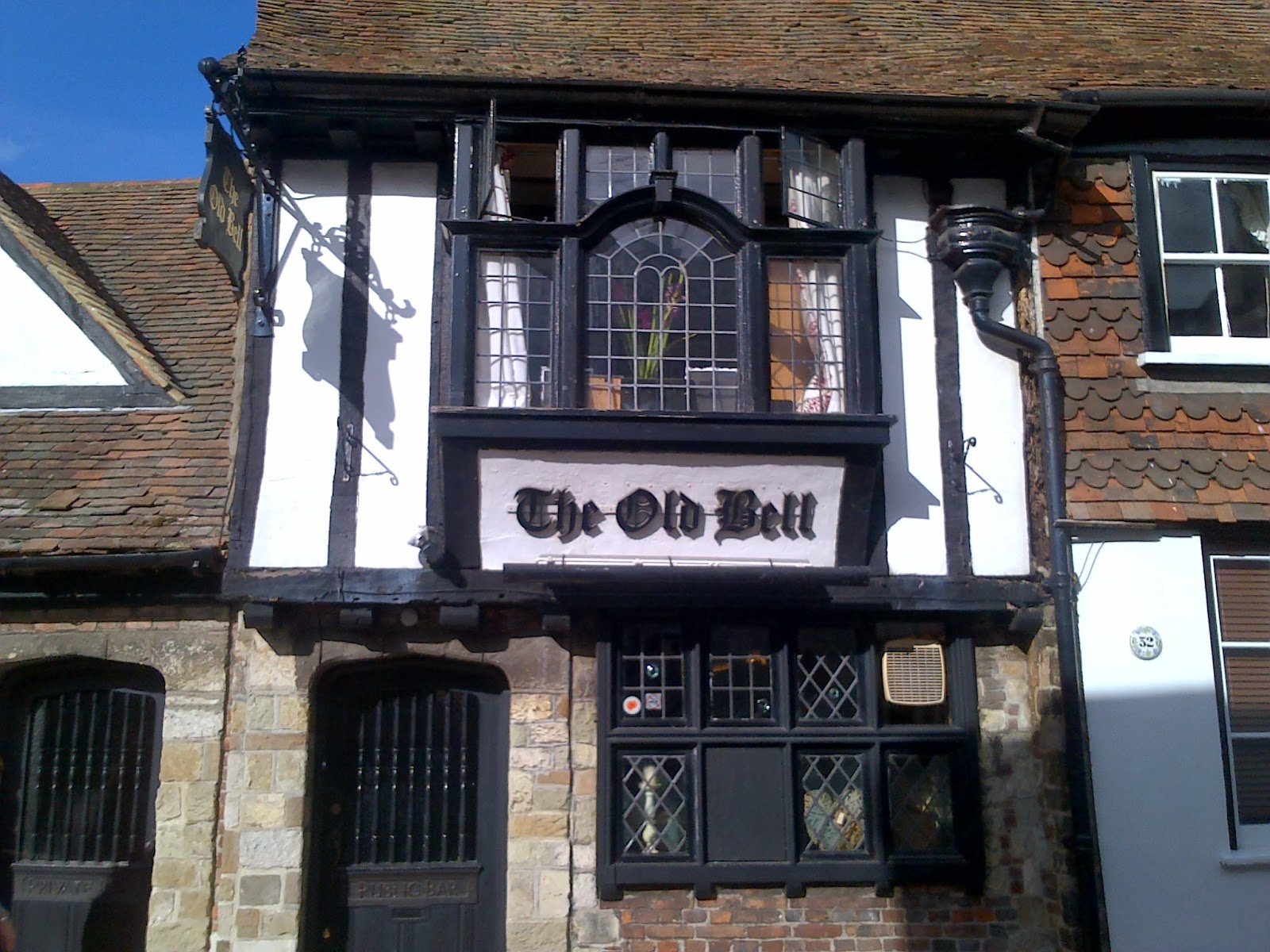
Rye's oldest pub!


Unfortunately I can't remember the name of this pub but if you ever find yourself en route to Coghurst Holiday Park and come accross a dainty little pub then it's worth going in. They had the most amazing collection of clutter I've ever seen.


These do not work


Saw this in a shop window and was adamant I'd seen it before haha - the Caravaggio version at least!


In Folkestone they have converted an old church into a whetherspoons, weird ordering alcohol from the Chansel of a church.........


The cute little windy streets of Folkestone :)


xxx


Le Grand Siecle

Le Grand Siecle 'the Great Century' was a term coined by the French Enlightenment writer Voltaire, with reference to the reign of Louis XIV. More specifically though, it can be attributed to the arts as a means to describe a certain prestige that they held in the following centuries.

Louis XIV ( reign: 1643-1715) is most famous for his consolidation of absolute monarnichal rule, the creation of a centralised state authority, and the dismantlement of the Feudal system that remained stubborn in parts of France (while appeasing the aristocrats by allowing their residence in his magnificent Palace of Versailles). Futhermore, he expanded French territory northeastwards into the Netherlands at the cost of their allies.

During the Great Century France not only produced their own talent but attracted a lot from elsewhere, too. In this instance, the focus will be on Nicholas Poussin. Nicholas Poussin was French but actually spent a lot of time in Rome. Nonetheless, he is held in high esteem as an artist who preserved classicism in the face of realism. The likes of Jacques-Louis David and Cezanne are known to have admired him for this. To confuse things (at least it really confuses me) he is considered a baroque painter. He is not a realist like the baroque painter Caravaggio, but a classicist. From this we can deduce that baroque art can come in either mode, classical or realist/naturalistic. I try to avoid jumping to conclusions most of the time but fail so i'll do it anyway: Poussin began the loooong journey of realism vs classicism that came to a head in the 19th century with Manet, Toulouse-Lutrec, Seurat, Courbet etc VS. Ingres, Laurens, Picou etc.

The Martyrdom of St. Erasmus, 1628-9.
During his stay in Rome, this was his sole papal commission (Urban VIII). Like realist baroque, the composition is dramatic. There are numerous figures crammed together much like Mannerist painting but without the ugly long bodies. HOWEVER, for want of a better phrase there is no "ugly realistic suffering", Poussin has painted stoicism in the saints face. 

The Death of Germanicus, 1927.
Again here the way that the figures are placed evokes a sense of tension and drama. You can imagine the death of someone in public provoking a wave of onlookers to hunch up in a big crowd. The image has been modeled on Roman sarcophagi and thusly seem 'shallow' in their spacial arrangement. Although crowded, you get the sense of movement within the crowd, noone looks stationary. Movement of course, being another benchmark in baroque art.

A Dance to the Music of Time, 1634-36.
I prefer his allegorical work to his religious work not only because the iconography (in my opinion) is more interesting but also because it's so pretty. The four figures dancing are supposedly the four seasons, although i'll admit the only easily idenfiable figure is autumn with the wreath of leaves around her head. To identify them more easily you have to take into account the role of father time and apollo in this allegory (former playing the instrument, with wings and latter in the chariot). Father time, especially when portrayed with or near an hourglass (held by the putti), acts as a memento mori. Now consider that, and the fact that we see apollo either at dawn or dusk. We can only assume the ambiguity of whether the sun is rising or setting is deliberate and refers to the ongoing cycle of the sun and by extension life itself, too. The two together would suggest that the painting is an allegory of death and rebirth. From this we can infer that if apollo represents the birth and death of a day and a life, then the figures may represent the stages of a year and the stages of life. Autumn may represent being born as inherently poor (the clothes are visibly inelegant); the figure to the right with head dress that may represent a working woman and thus the stage in life where you must endure labour to survive (winter); the third figure, spring, bears a crown and therefore could represent the wealth that comes from labour to her left; lastly, summer, with a wreath of flowers in her hair to represent the pleasures of the wealth. Then..... you die! thanks to father time. 

(Oh and the statue to the left has an old face and young face (one covered in facial hair, the other not))

Rebecca and Eliezer at the Well, 1648.
The patron that asked for this painting specifically asked for beautiful women. It is believed that the jugs are used to represent the perfect form of the woman, as per the request of the patron. This however is clearly very classical with only some hint of baroque in it (moving water from jugs, woman walking with jug on her head and one in her hand). Artists obviously get a kick out of making art history very confusing to study.

Landscape with a Man Killed by a Snake, 1648.
The use of landscape in this one creates a sense of baroque drama that Poussin has been lacking in. You can see four sets of figures: the dead bloke killed by a snake, the man running away from it, the woman alarmed by the other man running and lastly the fisherman who also seem to be panicked via the woman in distress.


The Ecstacy of St. Paul, 1650.
Baroque influence has clearly been strong in this instance due to its theatricality and lots of movement with the smoke and arms - yet it still lacks the dramatic delivery of Italian baroque.


Tuesday, 12 November 2013

Caravaggio

Michelangelo Merisi da Caravaggio arrived in Rome in 1592 at 21 years old. He rejected the standardised practice of painting on top of pre-drawn sketches, he painted alla prima. His brushwork has clear Venetian influence from the likes of Tintoretto and Titian but the style he came to formulate himself moves us into the Baroque era.

What makes Caravaggio important to us today (or at least those of us who care about this shizzle) is the fact that he spearheaded the realist rebellion of the Italian Baroque.  Even though the renaissance (and the movements that came from it) are extremely important in the development of art they have one downfall (in my opinion): lack of realism. The Renaissance masters were limited by the words of Leon Battista Alberti, the man who set the new-age boundaries of what art must be.

How did his treatsies limit them? He said art must be naturalistic (fine) but must pick and chose the most beautiful of what nature has to offer - in other words idealised. Therefore, the Quattrocento was a beautiful century: tearful Madona's were strikingly beautiful (when most of us would look horrendous crying), a large nose may have had some artistic nip and tuck, and there was strickly no portrayal of normal, realistic life...

SO, cue Caravaggio! He would use people from the streets of Rome as models for his characters and depicted the uglier aspects of life.

His better known works (which tend to be at the turn of the 17th century) are renowned  for his use of Tenebrismo which is a word used to describe sharp contrast in painting. This tenebrismo became more contrasted as time went on and although it's a bit of a cliche it is general belief that his paintings got darker as his life also 'got darker'.

Although I've already babbled on enough and it's time to move on to some paintings, I think Caravaggio's life was incredible enough to deserve at least some mention. After going through my notes I feel quite incredulous towards what I have written down and as any university student would I had a quick wikipedia check. Now... wikipedia's series of events vary from those of what my lecturer told us but seeing as the story passed on from my lecturer is far more entertaining I'll be telling you that, in my own amazing note taking prose:

"Caravaggio killed an opponent in a football match. He then fled to Naples, then Sicilly and then Malta. He became a knight but was found as a fugitive and sentenced to a beheading. He was imprisoned for a year but then escaped with bed linen like Rapunzel. He came to Rome in a boat but died as he arrived at the age of 39"

Yep

Cardsharps, 1594.
I think what I like about Caravaggio is that he reminds me of a baby French realist of the 1800's, although not on the same scale he deserves some credit. This painting here portrays a cheated card game, whereby the cheat signals the number on the card to his accomplice. I read here that the concealed eye of the cheat suggests the fragile nature of what's going on in the painting. In other words, the precise and coincidental positioning of the boys feather infront of the mans eye can be disrupted with the slightest  movement, which mirrors how easily the cheats could be sussed.


The Fortune Teller, 1594.
This again shows what could be likened to French bohemian life. More 'tomfoolery'. The young boy is visibly happy, while he gets his palm read by a gypsy...little does he know she's stealing his ring! It may not be so obvious to us now but portraying mishaps in normal life like this was virtually unheard of in Italy at this time.


Judith Beheading Holofernes, 1599.
It could be the quality of the above pictures but in any case the palette in this is far darker than before. Although this biblical scene was a popular choice for artists, it was never portrayed quite like this. We can see Judith, having seduced a drunk Holofernes, in the process of beheading him. Judith is famous for looking half disgusted and half determined to get the job done - none of the victorious hero stuff that we were treated to in abundance during the Renaissance.
Martyrdom of St Matthew, 1600.
St Matthew was ordered to be killed by the King of Ethiopa, of whom was criticised by the saint for wanting to marry his niece (who happened to be a nun and therefore was off-limits).The year this was painted is considered (in a process of trying to categorise art) the year Baroque came onto the scene. Here we see the previous level of drama in his paintings increased by a tenthfold: notice the boy dramatically waving his arm, the squirming man at the bottom right, St. Matthews arm out in a dramatic protest "NO PLEASE" etc etc.

The Entombment of Christ, 1603.
As a realist, Caravaggio couldn't resist painting the Virgin Mary as an old woman, whereas the Renaissance and Mannerist lot portrayed her as eternally and unrealistically young.


Death of the Virgin, 1606.
Caravaggio was famous during his own lifetime, but not always for particularly good reasons. One of the bad reasons are this below. Those mourning the dead Virgin Mary are all dressed like peasantry while the model for the Virgin herself was a dead prostitute found in the River Tiber. Mary Magdalene is crying more realistically than how Renaissance women cried: back curled and head down in disbelief? Caravaggio's use of models would not have gone down well with the Catholic church seeing as they already had their backs up following the counter-reformation. A brilliant detail in this is Mary's dirty feet.
Beheading of St. John the Baptist, 1608.
This was comissioned by the Knights of Malta (of which he served for briefly remember?) and is the moment where Salome awaits the head of the saint that she is to deliver to her mother Herodias. It is the largest painting by Caravaggio and is the only one that has been signed by him. His signature was only discovered in a 1950's restoration and thus whether his signature was meant to read 'I. Caravaggio' or 'F. Michelangelo' is unclear. Because of the fact that the signature is written in the blood on the floor, the former is asserted to be his confession for the murder of Ranuccio Tomassoni: 'I, Caravaggio, did this'. The latter assumption would suggest he is referring to the brotherhood of the Knights of Malta.

David with the Head of Goliath, 1610.
Here, nearing the end of his life, he painted himself as the head of Goliath. I do not know the exact dates but regardless of whether he'd escaped or not by now this picture clearly is a reference to what was to be his fate.


Wednesday, 9 October 2013

Baroque, the art of persuasion

The term 'Baroque' is a definition coined in the 19th century by Heinrich Wolffin in an attempt to define a stylistic period. This means, as always, that it is not perfect.

Given that, the approximated dates for this period is 1600-1750.

The name comes from, oddly enough, a Portuguese word: Barroco, an irregular pearl that is both precious and deformed. The later Rococo (1720-1770 approx), which was very decorated, obviously derives from this too somewhat. Alternatively, the two styles can be amalgamated into one as simply 'Barroco'.

The characteristics of the Baroque can be identified by the use of mirrors, gold, swirls, grandeur, richness, emotional exuberance, movement, tension...you get the point. Mostly though, the Baroque put a great deal of emphasis on the unification of painting, sculpture and architecture.

As is true of every period of artistic movement or style, there is always a historical backdrop. Baroque too was a result of its environment. In the 17th century, all the states we can identify today were more of less established in Europe, except for Germany and Italy. There was also a religious war in the mix, at the hand of Henry VIII's split from the Roman church.

Although we all know Henry VIII turned his back on the Pope because of his wish to divorce, the Protestant force that came to be got their name from the verb 'protest'. Although the king took his stance for less than holy reasons, the people who supported him did so in protest of the Pope's behaviour; (if you've ever watched Da Vinci's Demons, although set a century earlier the Pope Sixtus IV behaviour wasn't massively exaggerated - and we can only assume the likes of Paul III were similar!).

Right so, the aftermath that ensued lead to Europe being split in two: Catholics and Protestants. The Protestants banned idolatric practice. In other words, Protestants did not believe in the use of idols in representing the holy. Thus, art in Protestant countries was far more rigid and scaled down than in the Catholic countries. In the southern Netherlands, being under Catholic Spanish control - see here - all churches were whitewashed and can still be seen today.

The Oude Kerk in Amsterdam, originally covered in frescoes but was white-washed by the Protestant church.

While the arts were being affected in this way on the Protestant side, the Catholics were also appropriating the arts to serve a new purpose...cue the 'art of persuasion'.

Between the years of 1645 and 1663, the council of Trent met 25 times to re-establish the beliefs of the Catholic church. The main principles were that the church had to become clear, persuasive and sublime; and to enforce this, they applied it to the arts. There was also recommendations from the council to portray realistic interpretation of the Gospel and an 'emotional stimulus to piety'. If the Protestant's turning their back on Catholicism was the reformation, then the Catholic church redefining themselves was the counter-reformation.

So why would any of this matter? because it influenced the likes of chuches in Gran Canaria here and art in the Netherlands as pointed out above and seen here/here. It was also very influential on architecture in England, Italy and France.